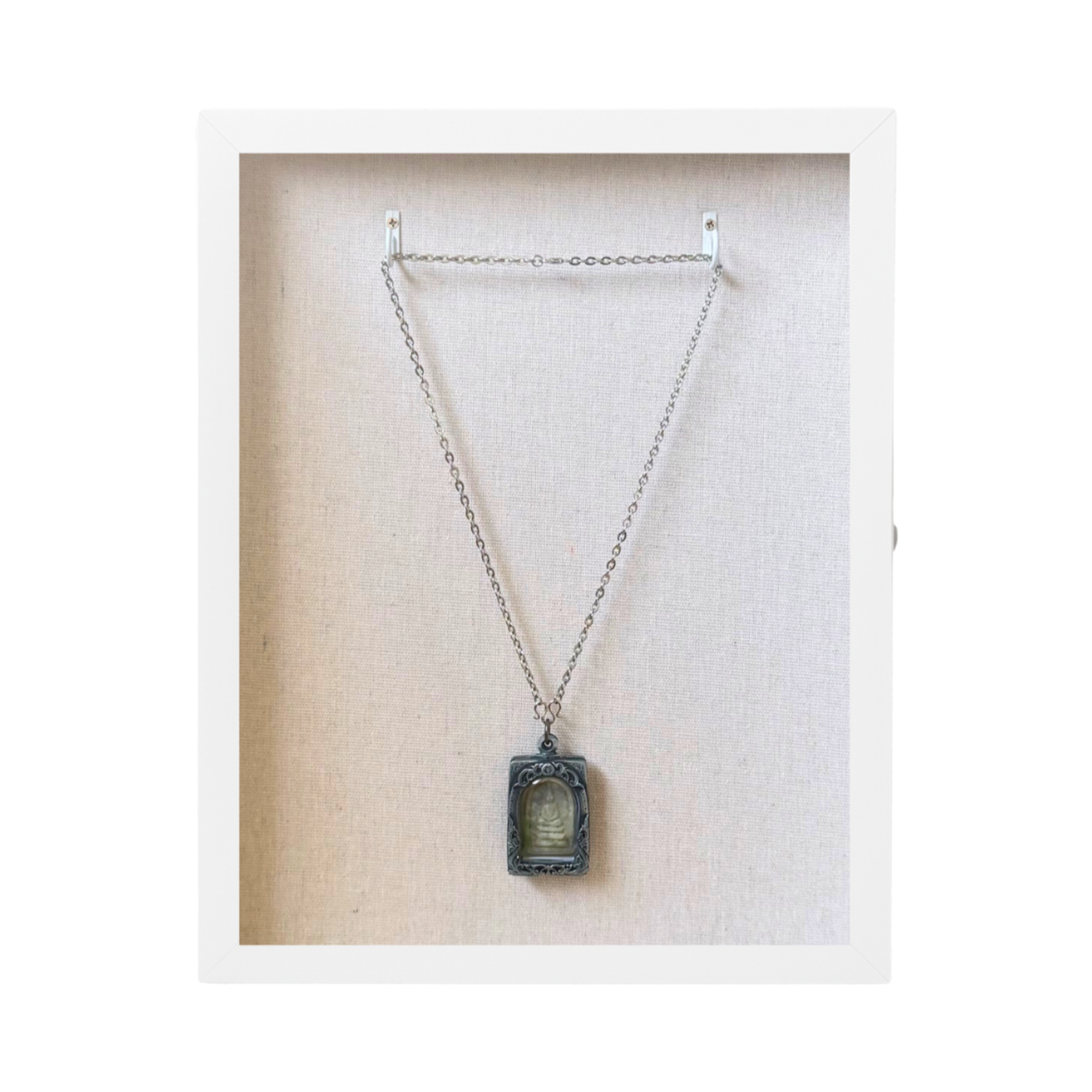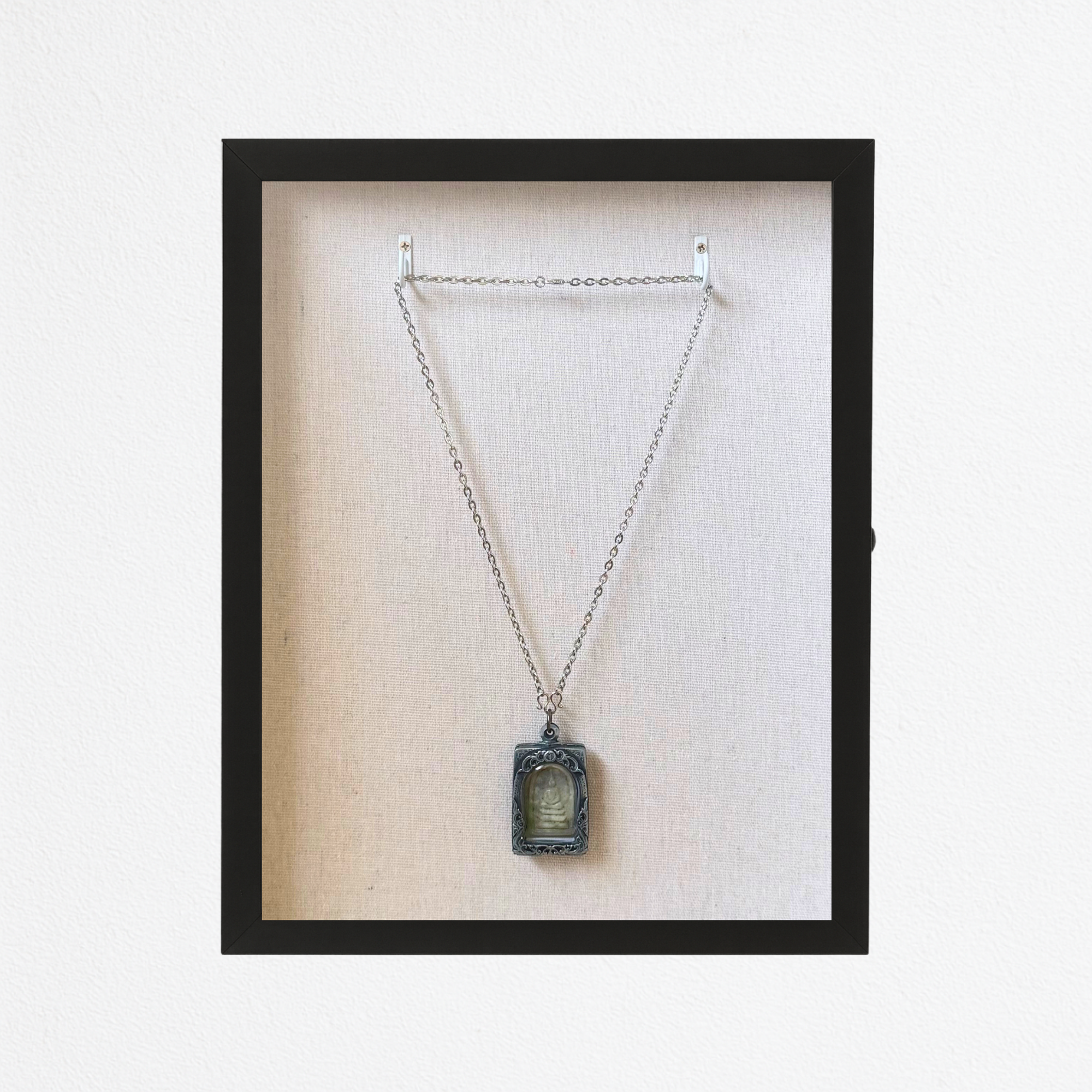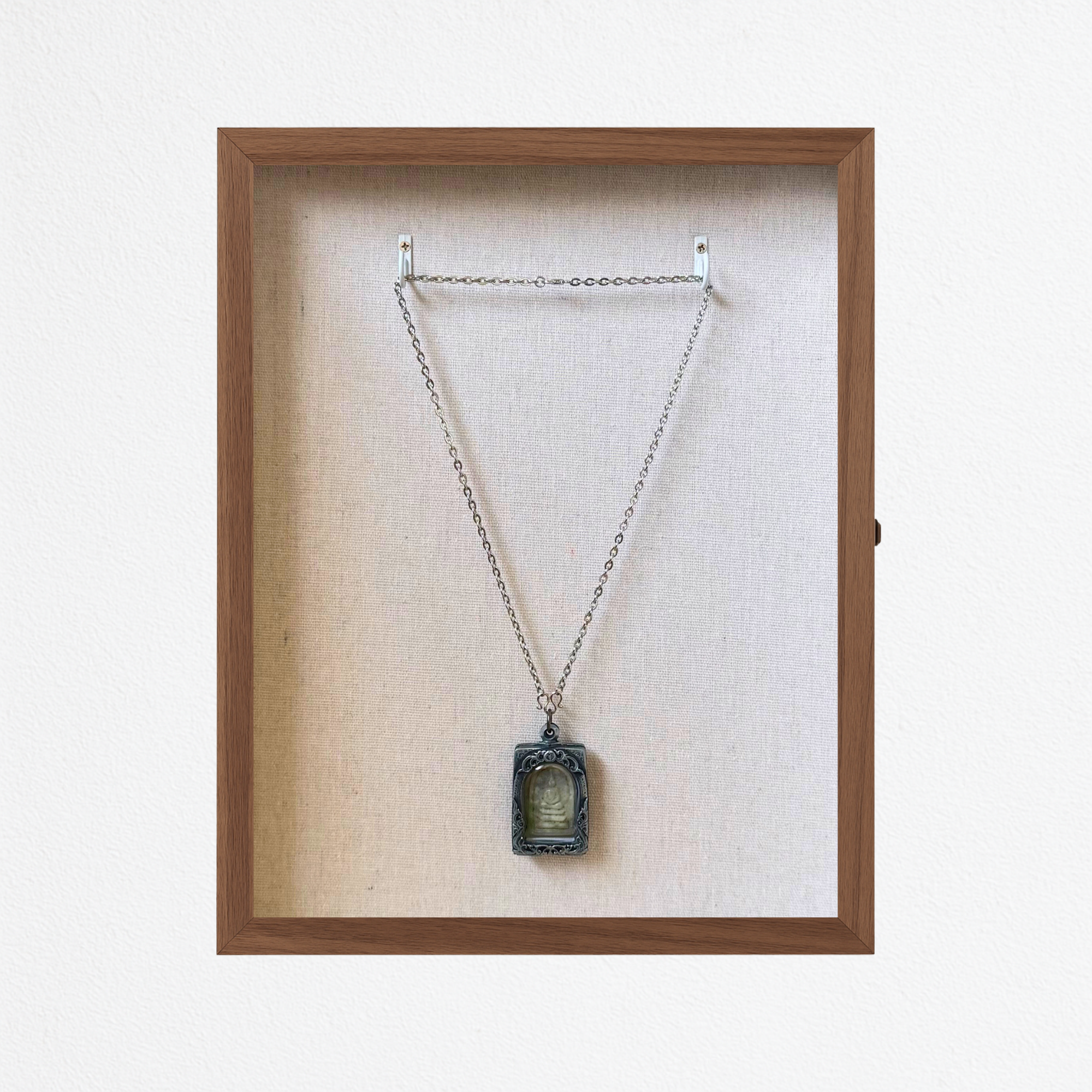

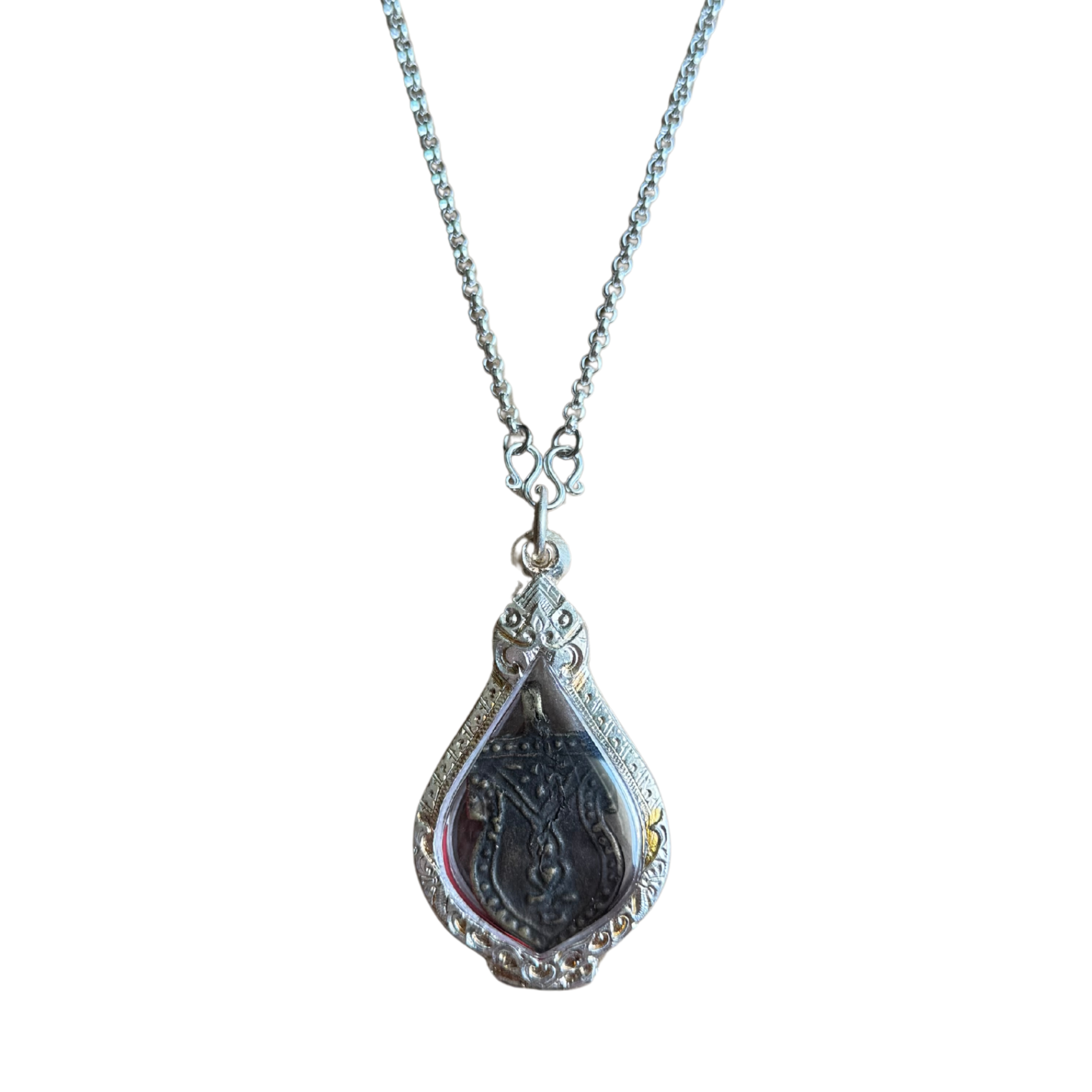
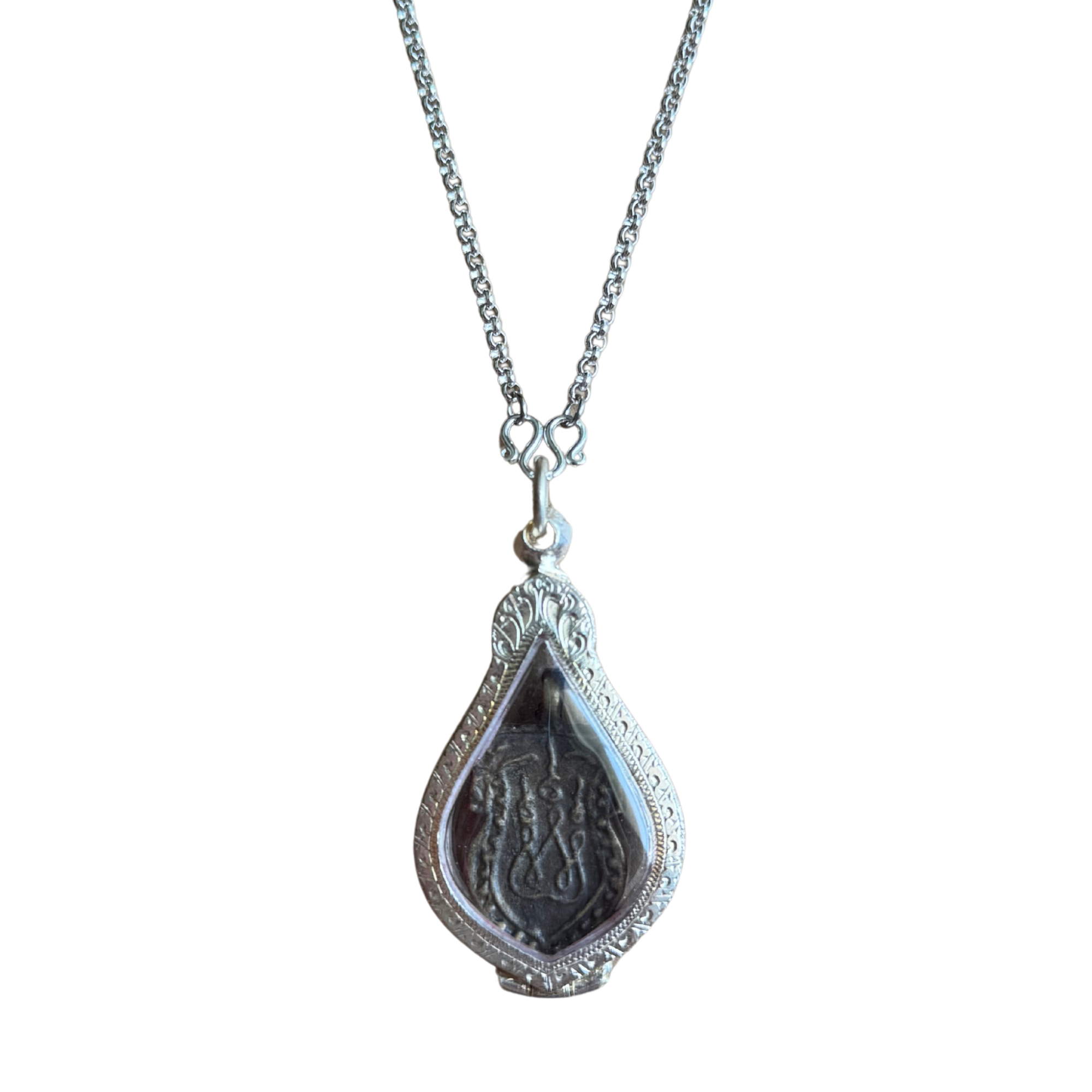
Aged ritual tablet preserved within a handcrafted 925 sterling silver shrine case and suspended from a 21" silver-plated rolo chain. Cast more than eighty years ago, the relief presents a traditional yantric composition centered upon a stylized Unalome motif and surrounded by sacred Khom characters and protective ritual geometry preserved within the Thai Buddhist tradition.
Rather than depicting a monk or deity, yantra tablets communicate through sacred geometry, Khom script, repetition, and symbolic proportion. They function as visual prayers intended to preserve protection, merit, and spiritual continuity within daily life.
Decades of wear have softened the relief, preserving the quiet evidence of continuous devotion. Like many surviving temple objects, portions of its history have faded while its presence endures.
Details
Traditional Thai yantra devotional tablet
Estimated age: 80+ years
Traditional yantra with stylized Unalome motif
Handcrafted 925 sterling silver protective casing
21" silver-plated rolo chain
Individually sourced archival object
Sourced in Thailand
Curatorial Note
Unlike portrait amulets, yantra tablets derive their meaning from symbolic composition rather than figurative representation. Sacred geometry, Khom script, and ritual line work function together as a devotional language developed within Buddhist monastic traditions across Thailand. Their purpose was not to illustrate belief, but to embody it.
The central motif resembles the Unalome, a sacred Buddhist symbol representing the winding path toward wisdom and awakening. Within Thai visual tradition it frequently appears alongside yantric compositions as a reminder that spiritual development is rarely linear, but unfolds through discipline, perseverance, and insight.
Without confirmed temple attribution, this example is presented within the broader tradition of Thai yantric practice rather than assigned to a specific ritual lineage.
Its purpose was not to be admired, but carried.
Aged ritual tablet preserved within a handcrafted 925 sterling silver shrine case and suspended from a 21" silver-plated rolo chain. Cast more than eighty years ago, the relief presents a traditional yantric composition centered upon a stylized Unalome motif and surrounded by sacred Khom characters and protective ritual geometry preserved within the Thai Buddhist tradition.
Rather than depicting a monk or deity, yantra tablets communicate through sacred geometry, Khom script, repetition, and symbolic proportion. They function as visual prayers intended to preserve protection, merit, and spiritual continuity within daily life.
Decades of wear have softened the relief, preserving the quiet evidence of continuous devotion. Like many surviving temple objects, portions of its history have faded while its presence endures.
Details
Traditional Thai yantra devotional tablet
Estimated age: 80+ years
Traditional yantra with stylized Unalome motif
Handcrafted 925 sterling silver protective casing
21" silver-plated rolo chain
Individually sourced archival object
Sourced in Thailand
Curatorial Note
Unlike portrait amulets, yantra tablets derive their meaning from symbolic composition rather than figurative representation. Sacred geometry, Khom script, and ritual line work function together as a devotional language developed within Buddhist monastic traditions across Thailand. Their purpose was not to illustrate belief, but to embody it.
The central motif resembles the Unalome, a sacred Buddhist symbol representing the winding path toward wisdom and awakening. Within Thai visual tradition it frequently appears alongside yantric compositions as a reminder that spiritual development is rarely linear, but unfolds through discipline, perseverance, and insight.
Without confirmed temple attribution, this example is presented within the broader tradition of Thai yantric practice rather than assigned to a specific ritual lineage.
Its purpose was not to be admired, but carried.