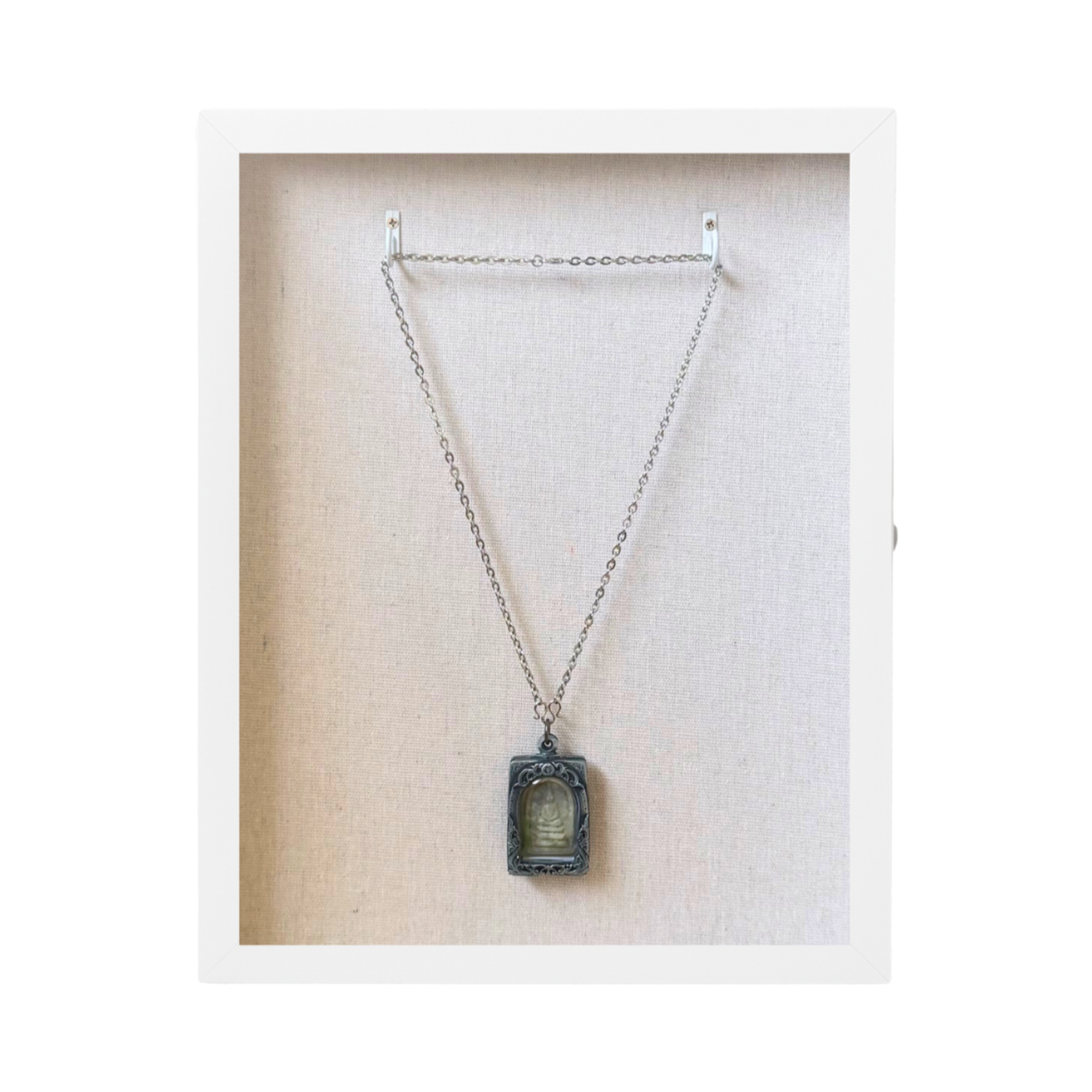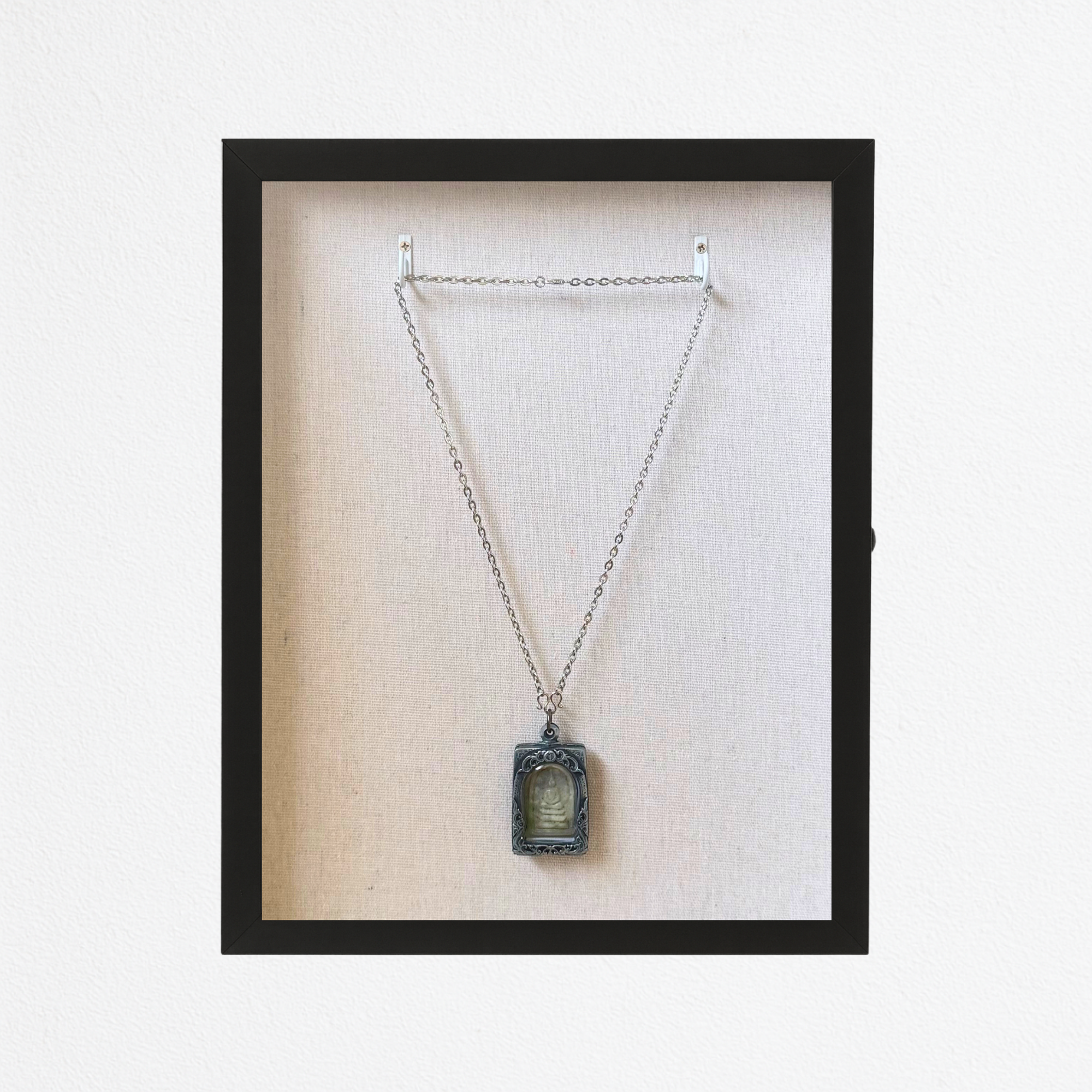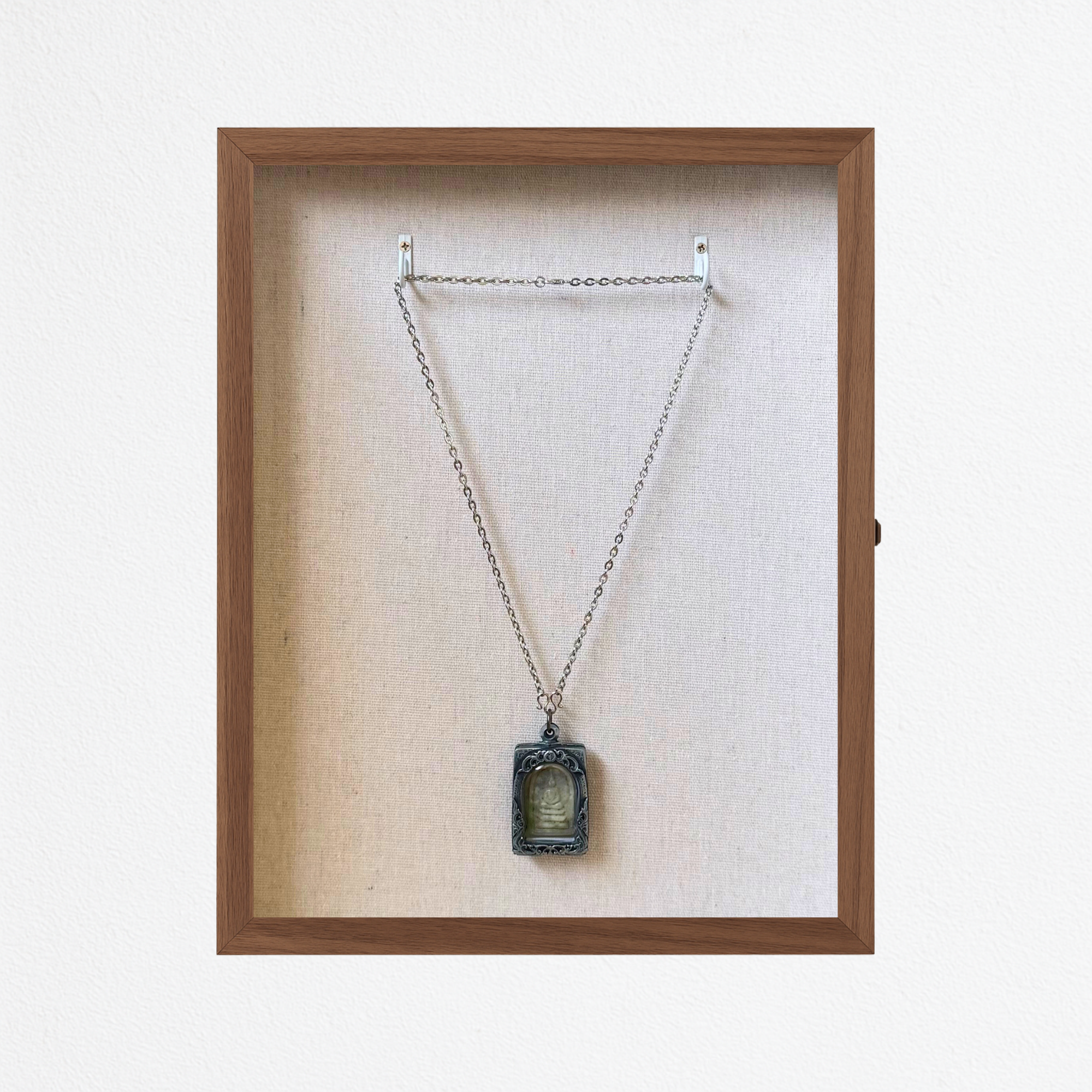

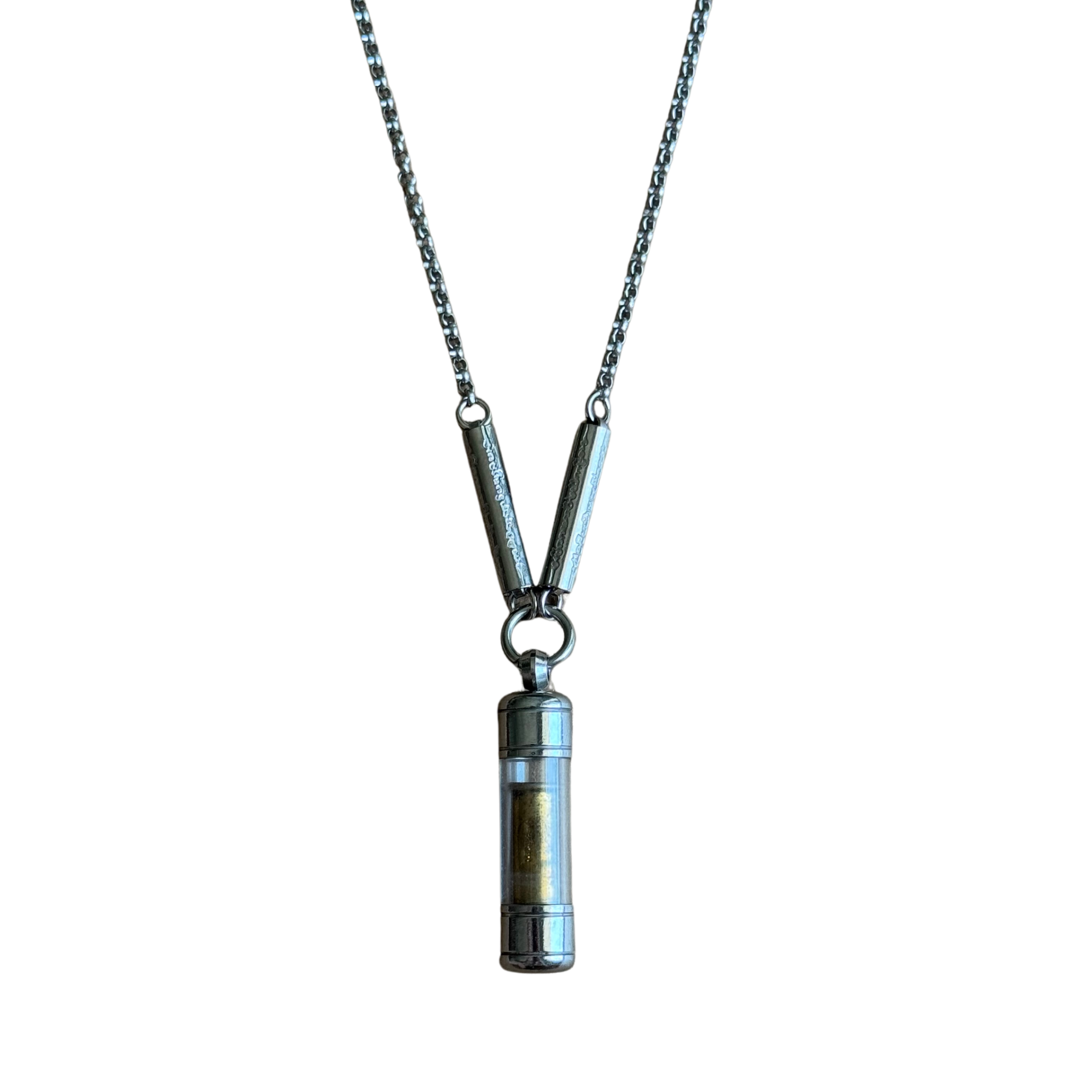
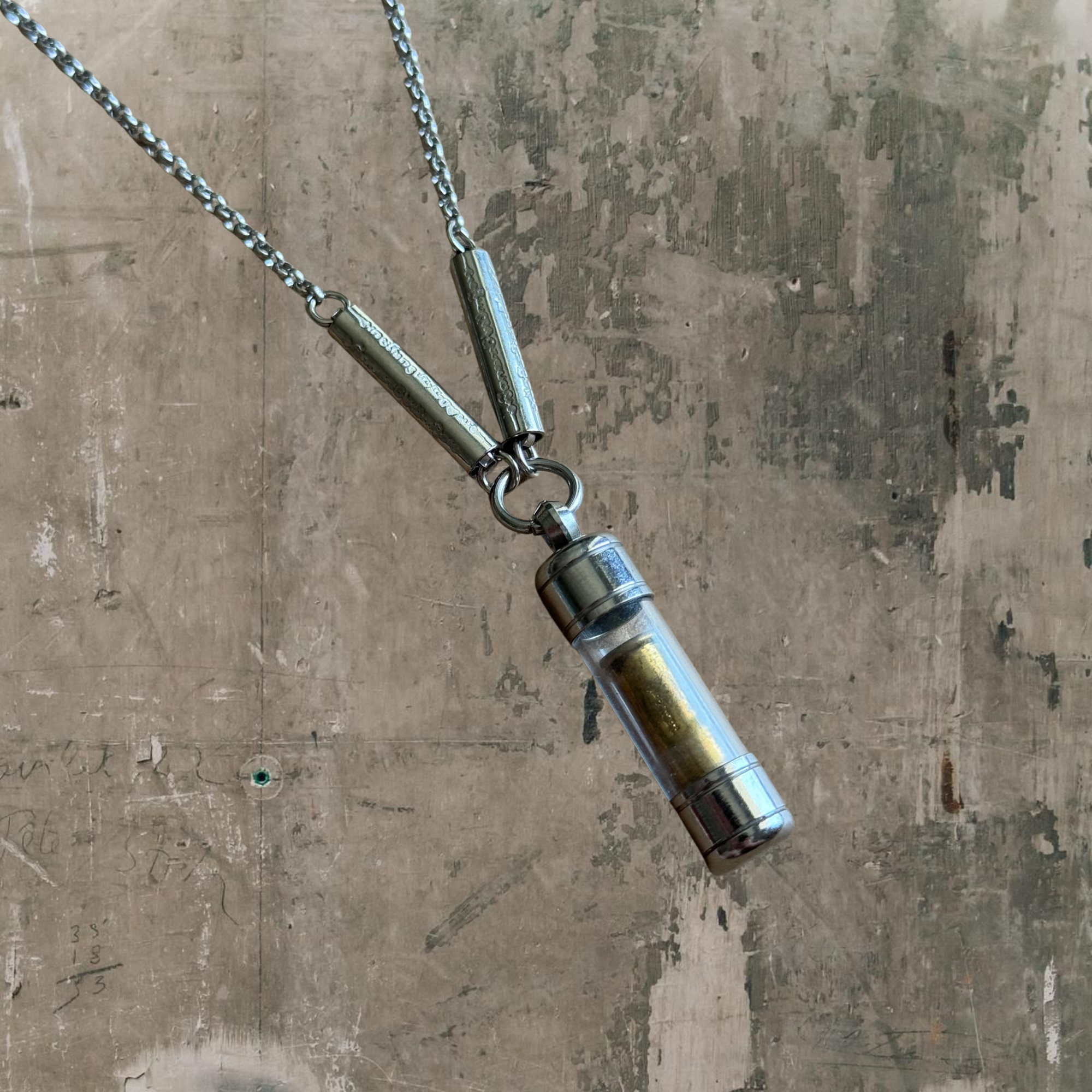
Traditional Thai takrud created from a repurposed spent .22 caliber cartridge casing and suspended from a 25" stainless steel chain. Once intended for a different purpose, the casing has been transformed into a devotional object, reflecting a longstanding Thai tradition of assigning new ritual meaning to everyday materials.
Throughout Thailand, monks and ritual practitioners have incorporated familiar objects into devotional life. Repurposed cartridge casings became one expression of this tradition, enclosing handwritten yantras, prayers, or other consecrated materials within their protective housings. The emphasis rests not on the casing itself, but on what it preserves.
Like other takruds, the object is carried rather than displayed. Its significance lies in the concealed inscription or blessing preserved within, reflecting the ritual intention established during its consecration. Wear acquired through years of use becomes part of the object's history rather than something to conceal.
Details
Traditional Thai takrud
Repurposed spent .22 caliber cartridge casing
Sealed devotional construction
Protective metal housing
25" stainless steel chain
Individually sourced archival object
Sourced in Thailand
Curatorial Note
The transformation of spent cartridge casings into takruds reflects a broader principle found throughout Thai devotional culture: ordinary materials may acquire new meaning through ritual use. Rather than erasing an object's earlier history, consecration assigns it a different purpose, allowing familiar materials to continue within a new devotional context.
Takruds of this type are intended to accompany everyday life. Their meaning lies not in outward display, but in the concealed inscription or blessing carried within.
Repurposed through ritual.
Traditional Thai takrud created from a repurposed spent .22 caliber cartridge casing and suspended from a 25" stainless steel chain. Once intended for a different purpose, the casing has been transformed into a devotional object, reflecting a longstanding Thai tradition of assigning new ritual meaning to everyday materials.
Throughout Thailand, monks and ritual practitioners have incorporated familiar objects into devotional life. Repurposed cartridge casings became one expression of this tradition, enclosing handwritten yantras, prayers, or other consecrated materials within their protective housings. The emphasis rests not on the casing itself, but on what it preserves.
Like other takruds, the object is carried rather than displayed. Its significance lies in the concealed inscription or blessing preserved within, reflecting the ritual intention established during its consecration. Wear acquired through years of use becomes part of the object's history rather than something to conceal.
Details
Traditional Thai takrud
Repurposed spent .22 caliber cartridge casing
Sealed devotional construction
Protective metal housing
25" stainless steel chain
Individually sourced archival object
Sourced in Thailand
Curatorial Note
The transformation of spent cartridge casings into takruds reflects a broader principle found throughout Thai devotional culture: ordinary materials may acquire new meaning through ritual use. Rather than erasing an object's earlier history, consecration assigns it a different purpose, allowing familiar materials to continue within a new devotional context.
Takruds of this type are intended to accompany everyday life. Their meaning lies not in outward display, but in the concealed inscription or blessing carried within.
Repurposed through ritual.