

AN AGE WITHOUT SILENCE
On attention, solitude, and the cultivation of character in the modern world.
We live in an age of unprecedented access. Knowledge, pleasure, convenience, and stimulation are always within reach. Nearly any question can be answered, any desire entertained, any silence interrupted. Yet somewhere in this abundance, we are losing something fundamental: the ability to be alone with ourselves.
We have grown accustomed to occupying every empty moment. We reach for distraction at the first sign of discomfort. Information accumulates faster than we can make sense of it. We move from one experience to the next, rarely allowing ourselves the time to fully inhabit either.
Stillness has become unfamiliar. Boredom, something to escape. Silence, something to fill.
What becomes of the mind when it is never allowed to be quiet?
THE PARADOX OF ABUNDANCE.
Humanity has never had such immediate access to information. Ancient philosophies, scientific discoveries, distant cultures, and opposing perspectives now exist within reach of a single device. What once demanded years of study, travel, or privileged access can be encountered in seconds.
This is no small achievement. Technology has fundamentally changed how we learn, communicate, and experience the world. It has given us the means to question what we know and encounter ways of thinking beyond our own.
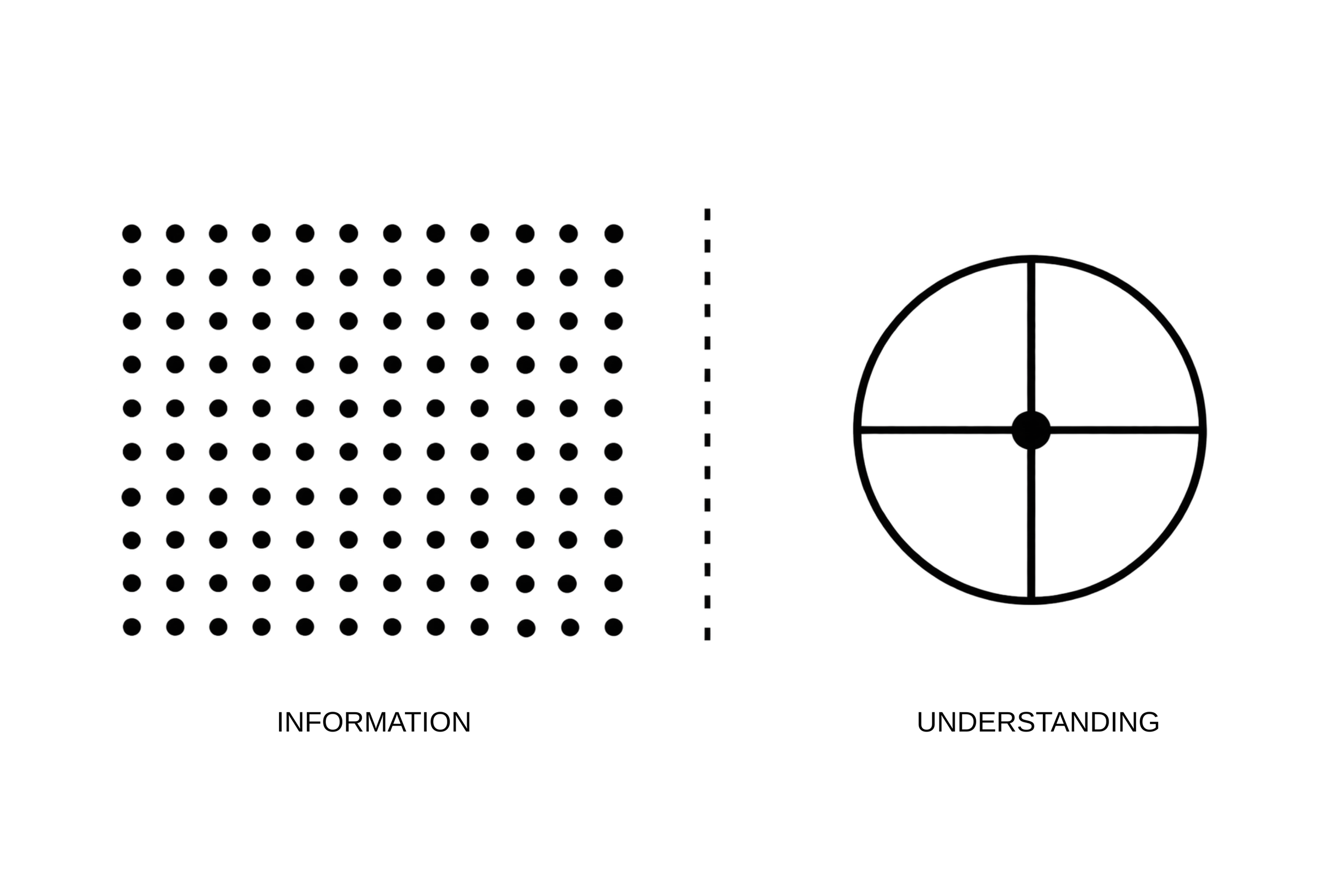
But access is not understanding. And information, however abundant, is not wisdom.
We can consume the thoughts of thousands without examining our own. Accumulate knowledge without questioning its meaning. Remain endlessly informed while rarely taking the time to think.
The problem is not that we have too much information. It is that we leave ourselves too little space to make sense of it.
Wisdom requires interpretation, discernment, and the willingness to sit with uncertainty. These things cannot be rushed. Some understanding comes only through sustained attention, reflection, and time.
Perhaps the challenge of the information age is no longer how much we can learn, but how deeply we are willing to think.
THE DISCOMFORT OF SOLITUDE.
There is a peculiar discomfort in being left alone with our thoughts.
Silence has a way of revealing what distraction allows us to avoid. Unresolved emotions, contradictions, uncertainties, and questions we would rather leave unanswered.
And so we find ways to escape it. A moment of boredom becomes an excuse to reach for our phones. An uncomfortable thought is interrupted by entertainment. Even a quiet evening can feel like something that needs to be occupied.
We have become so accustomed to stimulation that its absence can feel unsettling.
But solitude is not isolation. And boredom is not necessarily something to overcome.
When the mind is given room to wander, thoughts begin to take shape. We reconsider experiences, question old beliefs, and notice things about ourselves that often go unexamined. Not every moment of silence produces some profound realization. Nor should it have to.
There is value in simply allowing ourselves to be unstimulated.
To walk without headphones. To sit without reaching for a device. To observe without documenting. To experience something without immediately sharing it.
These are small acts, but they ask something of us: the willingness to remain present without needing to be entertained.
Perhaps solitude is not something we need to escape, but something we need to become comfortable with again.
THE CULTIVATION OF CHARACTER.
The ancient philosophers understood that character is not simply something we possess. It is something we develop through the way we live.
For Aristotle, virtue was a matter of habit. We become courageous by practicing courage, temperate by exercising restraint, and just by acting with fairness. Knowing what is good is not the same as living accordingly. Character is formed through action, repeated over time.
This raises an interesting question about the world we inhabit today.
What happens to patience when we rarely have to wait? To restraint when pleasure is always within reach? To discernment when our attention is constantly drawn toward whatever is most stimulating?
Convenience is not inherently harmful, nor is pleasure something to reject. Aristotle himself understood pleasure as part of a flourishing life. The concern is not what we have access to, but how easily our habits become governed by impulse.
The ability to tolerate discomfort, delay gratification, reconsider an opinion, or resist distraction does not develop without practice.
Every choice reinforces something. The things we repeatedly do, however insignificant they may seem, gradually shape our tendencies, our judgments, and ultimately our character.
When we allow every impulse to dictate our behavior, we become less accustomed to questioning it.
Self-governance does not require us to abandon pleasure, convenience, or technology. It requires the ability to engage with them on our own terms.
Freedom is not simply having the ability to choose. It is developing the character to choose deliberately.

THE FORGOTTEN PURPOSE OF LEISURE.
We have come to understand leisure primarily as time away from work. A chance to recover, entertain ourselves, or prepare for another period of productivity.
Even our free time is often measured by how well it serves the next obligation.
But leisure once held a more significant place in philosophical thought.
For Aristotle, leisure was essential to a flourishing life. It offered the freedom to contemplate, pursue knowledge, and engage in activities valuable in themselves, without the need for some greater reward.
This distinction feels increasingly relevant.
Rest is necessary. Entertainment has its place. But neither should define the limits of our free time.
There is something worth preserving in reading without urgency, exploring an unfamiliar idea, creating without expectation, or simply observing the world without feeling the need to document it.
These experiences may produce nothing measurable. No income, no achievement, no improvement to our productivity.
And perhaps that is precisely why they matter.
A life organized entirely around efficiency leaves little room to consider what makes that efficiency worthwhile.
We need time that belongs neither to work nor to the constant pursuit of stimulation. Time to follow curiosity without obligation, to think without interruption, and to experience something without needing to turn it into something else.
Leisure is not necessarily inactivity. It is the freedom to exist without the constant demand to be occupied.
TECHNOLOGY AS AN INSTRUMENT, NOT AN AUTHORITY.
Rejecting technology is not the answer to modern distraction.
These tools have given us extraordinary opportunities to learn, create, communicate, and encounter perspectives far beyond our immediate experience. Used well, they can deepen our understanding of the world and challenge the limits of our own thinking.
But the same devices that offer access to knowledge are designed to hold our attention. What begins as curiosity can easily become habitual consumption. We open a device with one intention and find ourselves occupied by something entirely different.
The distinction lies in how we engage with it.
Are we seeking understanding or simply stimulation? Are we questioning what we encounter, or looking for confirmation of what we already believe? Are we choosing what deserves our attention, or allowing it to be chosen for us?
Technology should remain an instrument of our curiosity, not an authority over our attention.
This does not require withdrawal from the modern world. It requires enough awareness to recognize when our habits begin to work against our intentions.
To use these tools for what they make possible, without becoming dependent on the constant stimulation they provide.
The aim is not to disconnect from the world, but to remain capable of directing how we engage with it.
RECLAIMING THE INNER WORLD.
We cannot eliminate distraction, nor should we expect to live without pleasure, convenience, or stimulation. The modern world has given us much to appreciate.
But abundance demands discernment.
The more possibilities available to us, the more important it becomes to decide which deserve our attention.
Perhaps developing the mind begins with something simple: making enough room to examine it.
To sit with an uncomfortable thought rather than immediately escaping it. To consider a perspective that challenges our own. To pursue knowledge without needing to justify its usefulness. To experience solitude without mistaking it for emptiness.
These are small exercises in patience, awareness, and self-command. Nothing extraordinary. Just the quiet work of learning to govern ourselves.
We do not need to withdraw from the world to develop a deeper relationship with it. But we should recognize that constant engagement is not the same as meaningful participation.
There is a difference between knowing and understanding. Between pleasure and fulfillment. Between occupying our time and actually inhabiting it.
Not every thought needs an immediate answer. Not every discomfort needs to be escaped. Not every moment needs to be filled.
In an age where everything competes for our attention, the ability to direct it may be among our most important virtues.
REOD.FORM — For those who see beyond the surface.
